Blog – Posted on Friday, Jul 17
60 Best Historical Fiction Novels of All Time

Is time travel impossible? For theoretical physicists, the jury’s still out, but book lovers can answer with a resounding “no”. Whether you’re keen to visit biblical Judaea or feel like living through the chaos of World War II, historical fiction can make you feel immersed in the colors and textures of the distant — or recent — past. If you’re feeling just a little sick of the present, look no further: here are the 60 best historical fiction novels to bring you back in time.
If you're feeling overwhelmed by the number of great historical fiction novels out there, you can also take our 30-second quiz below to narrow it down quickly and get a personalized historical fiction recommendation 😉
📚
Which historical fiction book should you read next?
Discover the perfect historical fiction book for you. Takes 30 seconds!
Ancient History

1. The Red Tent by Anita Diamant
The Red Tent is narrated by Dinah, the daughter of Jacob — the patriarch of the Israelites in the Old Testament. While not prominently featured in the Bible, Dinah is given the spotlight in this novel: she gets to speak about her experience as a woman in the early days of humanity.
When they menstruate, the women in Dinah’s family stay in a red tent together, where they discuss all sorts of local events. Diamant admits that there is no concrete evidence for this practice in ancient Israel, but it was common across many early civilizations. Her novel brings biblical history to life, and more importantly, gives voice to a crucial half of the human population, a group too often disregarded.

2. Lavinia by Ursula K. Le Guin
Ursula K. Le Guin is best known for her pioneering work in fantasy, but Lavinia proves she’s a master of historical fiction too. In this gorgeous retelling of the Trojan War and Rome’s subsequent founding, Le Guin draws on Virgil’s Aeneid to tell a moving, feminist story of war, family, and political destiny.
In the Aeneid, Lavinia is a silent figure, more chess piece than character — a princess fated to marry the hero Aeneas and stand by his side as he forges an empire. Le Guin, however, invests her with a rich inner life and a canny awareness of the tricks played by historical memory. In the book that bears her name, Lavinia converses with the shade of Virgil himself, wresting the narrative out of his control to rewrite it herself.
3. I, Claudius by Robert Graves
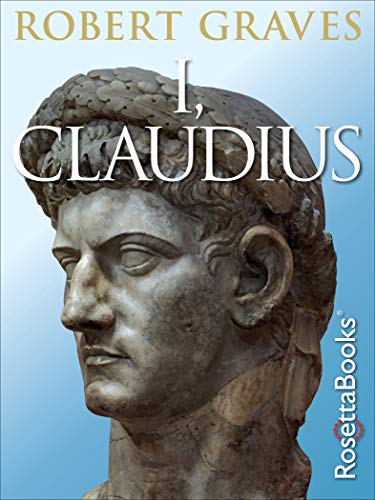
When you hear about Roman emperors, you typically think of Augustus or Nero — few actually remember Claudius. But if you are well-versed in Roman history, you probably remember Claudius as a physically weak, stuttering historian, an unlikely candidate for the position of Emperor. Yet the novel I, Claudius makes the case for his subdued existence being the driving force behind his ascension.
A fictionalized autobiography of Claudius, this pioneering piece of historical fiction offers his own documentation of his family and the political intrigue that happens within it. Through detailed observations recited in an incredibly orderly fashion, Claudius, the disdainful scholar, transports you into his mind and to the center of elite life in ancient Rome.

4. The Book of Longings by Sue Monk Kidd
At once painstakingly researched and painfully human, The Book of Longings tackles a provocative subject with a sensitive, lyrical touch: the hypothetical marriage of Jesus Christ. But you don’t have to be a regular Gospel reader to appreciate this touching, feminist-inflected story.
Born to a well-heeled family in first-century Galilee, Ana is brilliant — and bored. She’s expected to be silent and yielding, but she spends her hours writing in secret, longing for something to do with all her unappreciated talent. That’s when she meets Jesus, an eighteen-year-old with big ideas. The young rabbi with the revolutionary spirit shakes up Ana’s staid world for good — and steals her heart in the process.

5. The Dovekeepers by Alice Hoffmann
In 73 CE, a Roman legion laid siege to the mountain fortress of Masada, where a group of Jewish rebels had taken shelter. Completely entrapped, with the Roman battering ram closing in, the rebels chose to die instead of submitting. To avoid breaking the religious taboo against suicide, they drew lots and killed one another. Still, two women and five children survived the tragedy by hiding inside a cistern.
The siege of Masada, recorded by the Jewish historian Josephus, forms the backdrop for The Dovekeepers, which fills in the gaps left by Josephus’ account. Alice Hoffman breathes life into the women of Masada, who support the mountainside community by raising doves.
Medieval History

6. The Winter King by Bernard Cornwell
Historical fiction writer Bernard Cornwell has built a career off vivid, richly detailed reimaginings of the English past. In The Winter King and its sequels, Cornwell centers his narrative on the most iconic Brit of all: King Arthur. But his grounded take on the legend removes the magic — without making Arthur’s story any less interesting.
Cornwell’s Arthur isn’t a fantasy protagonist, a Chosen One shielded by powerful enchantments. He’s just a warlord, forced to protect a kingdom gone to chaos. The illegitimate son of High King Uther Pendragon, Arthur is a prince without a title. But now his father is dead, and the new ruler, the infant Mordred, is too young to hold the kingdom together. With the Saxons poised to attack, can Arthur save his homeland from ruin?

7. The Pillars of the Earth by Ken Follett
When Ken Follett took a sharp turn from suspenseful spy novels to historical fiction, readers didn’t know what to expect. Little did they know that this twelfth-century adventure featuring a down-to-earth mason, an outlawed witch, and a warm-hearted priest would become one of Follett’s bestselling novels.
The Pillars of the Earth opens with said mason — Tom Builder — searching for a job to sustain his family only to fall in love with the outlawed witch. Eventually, Tom is employed by the priest to build a cathedral, but all doesn’t go smoothly, thanks to a villainous earl and archdeacon who fear they’ll lose their clout if said cathedral gets built. From impressive word-pictures of majestic architecture to dramatic sieges, this novel gives you everything you need to feel like you’ve travelled to medieval England.

8. The Wreath by Sigrid Undset
As far as Nobel laureates in literature go, Sigrid Undset has slightly less name recognition than Bob Dylan. After all, no one can reflexively sing out lines from Kristin Lavransdatter, the historical fiction trilogy that netted her the book world’s biggest lifetime achievement award. Still, this masterful exploration of life in 14th-century Norway deserves a place on your bookshelf. Though the first installment, The Wreath, was published in 1920, it makes for a spellbinding read even today. Sexy, yet exhaustively researched, it’s sure to change your view of the Middle Ages.
The child of a wealthy landowner, Kristin Lavransdatter (the surname literally translates to “Lavran’s daughter”) grows up happily enough, taking solace in the Catholic faith she learned from her mother. But when she survives a rape attempt, she’s sent of to faraway Oslo, to live in a Benedictine convent. There, Kristin falls in love with a man who was excommunicated for raising children with someone else’s wife. As her exposure to the wider world challenges her faith, how will her conservative family respond?

9. The Name of the Rose by Umberto Eco
Imagine a Dan Brown novel — an action-packed race to solve a serial murder mystery that can only be unraveled by decoding ancient manuscripts and artistic clues. The Name of the Rose is all that, but it’s set in a prestigious monastery in 14th-century Italy. A young monk by the name of William arrives at this monastery right as the killings begin, and he is asked to take on the task of uncovering the truth behind them. As William dives deeper into the clues embedded in the texts and the architecture of the grounds, the other monks become embroiled in a battle of accusations.
Drawing from his well of knowledge on semiotics and ancient literature, Umberto Eco crafted a complex and enticing novel that’s difficult to put down. Though it’s his debut novel, The Name of the Rose is one of the best-selling books ever published.
Renaissance and Early Modern Europe

10. Wolf Hall by Hilary Mantel
Perhaps it’s because we grow up with stories of castles and kings, but historical fiction tends to be most exciting when it features Tudor England. Hilary Mantel’s Wolf Hall will take us through the most scandalous years of the dynasty — the reign of Henry VIII, the English king who broke away from the Catholic Church in order to marry a new wife (the first among many). Thomas Cromwell was the man who made this unorthodox move possible, and who rose to power because of it. This story follows his ascension to the top.
Well-researched and ingeniously written in modern English and the present tense, Wolf Hall pulls readers into the elite world of 1500s England almost instantly. But be prepared before diving into this one — you’ll probably want to jump to the next volume in Mantel’s trilogy the moment you finish this first installment.

11. The Other Boleyn Girl by Philippa Gregory
In Wolf Hall, you get to see the scandalous marital life of King Henry VIII through the eyes of his trusted lawyer; in The Other Boleyn Girl, you’ll get to watch how the story unravels from the perspective of Anne Boleyn’s sister, Mary. After he gets his marriage to Catherine of Aragon annulled, Henry VIII marries Anne — although rumor has it that he previously had his eyes on Mary.
While the facts are unclear, Philippa Gregory’s dramatic novel picks up on traces of what might have happened and presents a breathtaking picture of the intrigue and betrayal at works behind these supposed affairs. If you enjoy A Song of Ice and Fire and are (still) waiting for the next book, The Other Boleyn Girl might be a good stand-in. In any case, you’ll get to immerse yourself in the almost-magical world of castles and knights in Tudor England.

12. As Meat Loves Salt by Maria McCann
The English Revolution has never been quite so sexy. In As Meat Loves Salt, the hot-tempered Jacob Cullen joins his friend Christopher Ferris in the army, fleeing a troubled marriage — and a potential murder charge. But there’s something more between them than comradely affection, and 17th-century England isn’t the safest place for two men in love.
As rich in historical detail as it is steeped in sensuality, this moody historical romance doesn’t shy away from depicting the horrors of war. Be forewarned: Jacob, with his violent rages and checkered past, isn’t the cuddliest of protagonists. His brooding, anti-heroic bent lands this book firmly in grimdark territory.

13. Girl with a Pearl Earring by Tracy Chevalier
Even if you’re not an art history buff, you’ve probably seen Dutch master Johannes Vermeer’s most famous painting. Next to the Mona Lisa, the so-called Girl with a Pearl Earring just might be the Western world’s most famous two-dimensional lady. She’s been enchanting viewers with her wistful gaze (and tasteful accessorizing) since the 17th century, but no one knows much about her — not even her name.
In Girl with a Pearl Earring, Tracy Chevalier fills in the gaps, giving Vermeer’s anonymous model a rich inner life. Sixteen-year-old Griet joins the Vermeer household as a maid. Soon enough, the great painter himself takes notice of her sharp eye and artistic temperament. But, as Griet comes to find, life as a muse comes with its share of unexpected dangers.

14. Abundance by Sena Jeter Naslund
First of all, let’s get one thing straight: she probably didn’t tell them to eat cake. Since the revolutionaries led her to the guillotine in 1793, Marie Antoinette has suffered something of a bad rap. The silly queen, with her wigs skimming the chandeliers and her panniers stretching from wall to wall, was held to represent the worst of the ancien régime.
In Abundance, however, Sena Jeter Naslund shows us the woman underneath all that silk and powder. Only fourteen when she leaves Austria, Maria Antonia — as she was born — crosses the threshold into her new homeland naked and alone. Forced to shed her Austrian clothing and her Austrian name to be remade as a princess of France, Marie must find her place in a cold and isolating court.

15. A Tale of Two Cities by Charles Dickens
First published chapter by chapter in Dickens’s literary periodical, A Tale of Two Cities is set during the French Revolution. It follows the various people in Lucie Manette’s life: her previously imprisoned revolutionary father, her exiled aristocratic suitor, Charles Darnay, and his romantic rival , Sydney Carton — a smart but failing English lawyer.
The mid to late nineteenth century was a chaotic time for Europe, as modernization heightened the ugly disparity between the rich and the poor across the nations. Darnay’s disavowal of his family and Carton’s determination to address injustices emerge as heroic acts that only highlight the horrific inequality of the time.

16. Outlander by Diana Gabaldon
Interested in the nationalistic history of Scotland? You can live it all via Outlander. Tag along with English nurse Claire Randall as she gets lost in time while exploring the wilderness of the Scottish Highlands on her second honeymoon. Starting out in 1946, she is transported back to 1743, right as the tension between Scotland and England is mounting. Finding a way home takes the backseat as she finds herself having to seek help from either a brutal and domineering English captain or a sceptical but good-natured Scottish clansman in order to survive. As she becomes embroiled in a conflict that she’s only ever heard about in her 20th-century life, Claire begins to find a place for herself in this unfamiliar setting.
Outlander is the first instalment of Diana Gabaldon’s eight-book series of the same name, which is considered one of the most successful series ever written.

17. Perfume by Patrick Suskind
Cinephiles and scent enthusiasts probably know Perfume: the film version of this 18th-century crime thriller won accolades for its luxuriant cinematography. However, critics complained, about the screenplay. That’s where Patrick Suskind’s original novel comes in: its lush, potent storytelling is as intoxicating as a bottle of the finest scent.
Jean-Baptiste Grenouille’s mother is executed almost as soon as he’s born, leaving him to fend for himself on the Parisian streets. Fortunately, he wields an unusual superpower: a perfect sense of smell. Soon, his talent catches the attention of a top perfumer, who takes him on as an apprentice. But as he masters the techniques for crafting perfume, Grenouille becomes haunted by the most alluring fragrance of all — the scent of a beautiful virgin, that can only be captured in death.
Global Early Modern

18. Silence by Shusaku Endo
In 1637, a group of masterless samurai took up arms against the Tokugawa shogunate, aided by the mostly Catholic peasantry who farmed tJapan’s Shimabara Peninsula. The shogun cracked down hard on the rebels, leaving more than 27,000 dead. In the aftermath, Japan’s Catholics went underground, worshipping their God in secret.
The submerged history of the Kakure Kirishitan, or “hidden Christians,” forms the backdrop to Shusaku Endo’s Silence. The Portuguese Jesuit Sebastião Rodrigues arrives in Japan looking for a senior colleague who’s rumored to have turned his back on the church. He’s greeted by an atmosphere of dread: Tokugawa officials, determined to enforce a state ban on Christianity, roam the countryside looking for followers of the forbidden religion.

19. The Twentieth Wife by Indu Sundaresan
Born to a Persian family robbed of their fortunes en route to India, Mehrunissa — the titular twentieth wife of Prince Salim of the Mughal empire — experiences a true rags-to-riches life.
Indu Sundaresan’s debut novel retells the story of how this determined young woman meets the prince, charms him with her intelligence, and eventually becomes his last wife, even though convention forbade it (Mehrunissa was a widow when she married the then emperor). Through harems and political battles, their love for one another shines through, as does Mehrunissa's undying desire to realize her vision of a better life for herself as well as her people.

20. Alex and Eliza by Melissa De La Cruz
Like so many other history buffs, YA author Melissa De La Cruz is a Hamilton fan. In fact, Lin-Manuel Miranda’s hip-hop-inflected, Tony Award-winning take on the “ten-dollar founding father” inspired Alex and Eliza. This soft, swoonworthy romance recounts the courtship of Hamilton, then an up-and-coming colonel, and Elizabeth Schuyler, the practical, socially conscious middle daughter of a wealthy New York magnate.
Like her musical inspiration, De La Cruz sometimes plays fast and loose with the facts in the service of telling a good story. But the romance at its center — not to mention the sisterly banter between the Schuyler girls — makes this an utterly charming read.

21. Snow Flower and the Secret Fan by Lisa See
If you’re a fan of late imperial Chinese history, you should definitely give Snow Flower and the Secret Fan a read. Set in the final decades of the last dynasty in China, the story follows two women, Lily and Snow Flower, who accompany one another through various rites of passage. As they suffer and grow together — exchanging letters and poetry when they’re not face to face — both come to terms with the societal expectations restricting them as women.
Elegantly written, Snow Flower and the Secret Fan brings its readers back in time and presents to them a realistic image of what it was like to be a woman in late imperial China. It’s brilliance lies in its account of women’s ingenuity and the agency they seize despite the limitations imposed on them.

22. Homegoing by Yaa Gyasi
Homegoing can be described as an interlinked series of short stories following the lives and descendants of two Ghanaian sisters. One got married off to a slave trader, and the other got traded to America. The chapters alternate between them, switching back and forth between Africa and America and illustrating the lives of Black people through slavery and colonialism, civil rights movements and nationalist uprisings.
The chapters don’t give readers the complete knowledge of each generation’s experience, but they do offer an emotional and comprehensive picture of the African diaspora, unpacking historical circumstances that continue to affect millions of people today.
19th Century
23. War and Peace by Leo Tolstoy
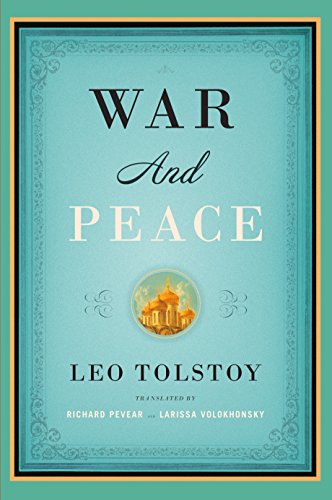
You’ve very likely heard of this historical epic — Leo Tolstoy’s War and Peace is a pillar of classic literature that’s known and studied all across the world. Set in a Tsarist Russia under attack by Napoleon and his mighty army, the book follows a cast of characters from all walks of life. There’s Pierre Bezukhov, the bastard son of a famous count, who struggling to understand his position in society; Natasha Rostova, the romantic and vivacious countess who lives in the moment; and Andrei Bolkonsky, the high-born prince who rejects the safety provided by his status to join the war effort against the French.
No one is spared from the suffering caused by a war that’s focused on protecting the empire and not its people — a poignant reflection that comes through thanks to Tolstoy’s thorough research of the period. This colossal masterpiece is no easy read, but it’s a gem that history buffs should not skip over.

24. How Much of These Hills Is Gold by C. Pam Zhang
This Gwyneth Paltrow-approved Goop pick shines a light on the Chinese immigrants who found their way to California in the 1840s, drawn by the promise of gold. Lucy and Sam are the children of one such prospector. But when their father dies suddenly one night, they’re left alone, in a ramshackle mining town where their very existence makes them unsafe.
How Much of These Hills Is Gold centers on Sam and Lucy’s quest to give their father a proper burial. This isn’t an easy book to read: after all, we’re tracking two children, neither of them into their teens, as they drag a corpse around a desert landscape teeming with threats. But thanks to C. Pam Zhang’s lovely narrative style, this novel rewards as much as it devastates.

25. Alias Grace by Margaret Atwood
It’s 1843 in Canada, and Grace Marks has been convicted of murdering her employer, even though she has no memory of the event. She’s sentenced to lifelong imprisonment, although a young doctor, Simon Jordan, proposes that he study her psyche and memory some more to uncover the mystery behind her apparent amnesia.
Alias Grace is a historical fiction novel for lovers of psychological thriller. The fact that it’s based on a true event and set in the grimy early modern era only enhances the mysterious mood of this suspenseful novel.

26. The Luminaries by Eleanor Catton
This sprawling 800-pager made 28-year-old Eleanor Catton the youngest-ever winner of the prestigious Booker Prize. Remarkable for its intricate plot as well as its prodigious length, The Luminaries takes inspiration from an unlikely pair of sources: the New Zealand gold rush of the 1860s and the zodiac.
A Scottish lawyer driven by dreams of gold, Walter Moody is ready to make his fortune from the mines of Hokitika. But then he stumbles into a strange meeting in a hotel lobby. From Maori hunter to Danish merchant, Chinese goldsmith to French clerk, twelve odd odd bedfellows have gathered to discuss a mysterious death. Each member of Catton’s fascinating ensemble cast corresponds to a zodiac sign or an astronomical body. Watching their paths converge and diverge in enigmatic patterns makes this book’s central mystery all the more enthralling.
27. The Underground Railroad by Colson Whitehead
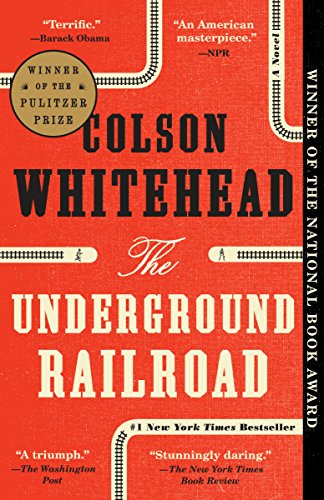
You might say The Underground Railroad was the book of 2016. A cerebral, sardonic alternate history — with an emphasis on the “history” — it swept the full slate of literary prizes, from the National Book Award to the Pulitzer. The celebrated Black author Colson Whitehead, famed for the irony lacing his prose, tackles slavery with his trademark ingenuity and wit. The result is an unsentimental, yet deeply affecting, look at a violent and far-reaching institution.
Cora, a slave on a Georgia plantation, gets the chance to escape when new arrival Caesar tells her about the Underground Railroad. Faced with the prospect of freedom, Cora feels torn — her own mother fled the plantation some time ago, leaving her to suffer alone. Still, she and Caesar ultimately decide to take flight. Together, they must make their way to the Underground Railroad which, in Whitehead’s reimagining, becomes a literal railroad, complete with conductors, tunnels, and tracks.

28. The Twelve Rooms of the Nile by Enid Shomer
She invented a discipline that changed medicine forever. He wrote one of the finest novels in history. And now, the Fates have brought them to the same place, at the same time. This might sound like the premise of a charmingly kooky romance between made-up characters, but it actually describes two real-life historical icons: Florence Nightingale, the mother of modern nursing, and Gustave Flaubert, the author of Madame Bovary. For a while, in 1850, both happened to be sailing up the Nile.
In reality, Nightingale and Flaubert didn’t seem to have bumped into each other at all on their Egyptian treks. But The Twelve Rooms of the Nile envisages what might have happened if they had. In Shomer’s dazzling imagination, no-nonsense Florence and hedonistic, womanizing Gustave strike up the unlikeliest of friendships.

29. Measuring the World by Daniel Kehlmann
The science of measurement might not sound like the most exciting subject for a work of historical fiction, but Austrian author Daniel Kehlmann pulls it off with wit and aplomb. In Measuring the World, two German geniuses, intoxicated by the promise of the Enlightenment, set out to change the world by, well, measuring it.
In 1828, at a convention for scientists, Alexander von Humboldt meets Carl Friedrich Gauss. Humbolt, a polymathic adventurer from a family of landed gentry, has already plumbed the depths of South America. The homebody Gauss, meanwhile, is rapidly developing a reputation as a once-in-a-century mathematical mind — he can map the world through number theory without leaving his home. Kehlmann’s account of their meeting is cerebral, fast-paced, and gently funny,

30. The Marriage of Opposites by Alice Hoffmann
From the author of The Dovekeepers comes this story of transcendent beauty and forbidden love in 19th-century Paris. Camille Pissarro, the father of French Impressionism, produced a new way of looking at the world: a light-drenched, expressive style that makes staid scenes look alive with movement. The Marriage of Opposites, however, takes a look at the extraordinary relationship that produced him — a love affair that changed the shape of art.
Rachel, then a spirited French-Jewish girl and not yet Pissarro’s mother, is married off to an aging widower in a last-ditch effort to save her family’s business. But then her husband dies, and she finds herself in the unexpected — an inexorably charming — company of his nephew, a young man seven years her junior.

31. The Master by Colm Tóibín
A master of Gothic literature, the English novelist Henry James made an indelible impression with the haunting characters in his fiction, from the sinister twins in The Turn of the Screw to the high-spirited socialite in The Portrait of a Lady. In The Master, however, James himself becomes a character. Colm Tóibín’s subtle, psychologically incisive novel excavates the great novelist’s inner life — and casts his extraordinary output in a new light.
It takes guts to ventriloquize one of the greatest writers in Anglophone history, but Tóibín pulls it off with an exacting thoughtfulness: his James emerges on the page as both a literary giant and a flawed, vulnerable human being.
Civil War

32. Lincoln in the Bardo by George Saunders
Lincoln in the Bardo might be George Saunders’s first novel, but he had a long and vibrant writing career before it ever went to press: he racked up National Magazine awards for his short fiction and was even named a MacArthur genius. In this Booker Prize-winning tour de force, you see the luminous style and emotional sensitivity that made him such a compelling voice in short fiction.
The Civil War is already raging when President Lincoln’s son dies. Only eleven years old, Willie Lincoln finds himself in the “bardo,” the Tibetan word for the liminal space between this life and the next. There, the ghosts of men and children swirl around him— some of them cut down by the war that will consume his father’s presidency.

33. Gone with the Wind by Margaret Mitchell
This classic needs no introduction, but we’ll give you a brief synopsis anyway. Scarlett O’Hara, daughter to a wealthy plantation-owning couple in 19th-century Georgia, USA, is raised in luxury, but she finds herself in hardship as an adult. Widowed at a young age, she raises her child as a single parent while the American Civil War wages. As she struggles for survival in a land ravaged by warfare, disease, and famine, she continuously encounters Rhett Butler — a pompous opportunist with whom she maintains a love-hate relationship.
While some are tempted to call Gone With the Wind a romance, Margaret Mitchell’s only published work has long been considered a historical masterpiece — though its regressive, period-appropriate view of race can be painful to read today. Spanning the whole war, this epic takes you through the horrors that armed conflicts inflict upon civilians. And while it focuses only on the perspective of slaveholders, it provides a vivid insight into a defining moment in American history.

34. Cold Mountain by Charles Frazier
Going back to the period of the American Civil War, we meet W. P. Inman and Ada Monroe in Cold Mountain. Inman is a soldier with no interest in the war, and he’s now deserting to return to his lover, whom he hopes remains in their hometown of Cold Mountain, North Carolina. Meanwhile, Ada, said lover, has been struggling to survive in an economy broken by war, on a patch of land left to her by a wealthy father. Circumstances forced her to travel to find work, not knowing whether Inman was alive.
From the battlefield to the home front, Cold Mountain covers the many facets of the Civil War. Throughout it all, the loyal love of the two protagonists for one another acts as a guiding light.

35. March by Geraldine Brooks
Little Women might be one of the best children’s books of all time, but its nuanced take on war, family, and sacrifice make it an absorbing read for grown-ups too. If you want to immerse yourself in the classic’s more mature themes, head on over to Geraldine Brooks’s March. Experience this well-loved story from the perspective of the absent March father, whose “little women” hold down the fort at home while he’s off on the front lines of the Civil War.
A staunch abolitionist with an unshakable religious faith, Mr. March feels compelled by his conscience to serve the Union Army as a chaplain. As the soldiers under his care clash with the Confederate troops, he writes letters back home that conceal the true depth of the suffering all around him.
Early 20th Century
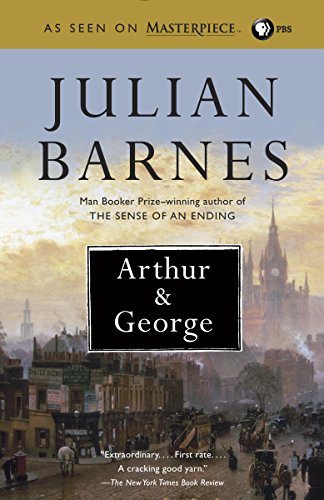
36. Arthur and George by Julian Barnes
The titular Arthur is the famous creator of Sherlock Holmes, Sir Arthur Conan Doyle, while George is George Edalji, a half-Indian lawyer falsely imprisoned for a crime he didn’t commit. The two knew each other as children but fell out of touch as adults — that is until George faces carceral injustice. In his time of need, Arthur comes to his aid. Using his skills as the crafter of ingenious detective stories, Arthur tries to find the true culprit and get his friend acquitted.
While the author warns that this account of Sir Arthur Conan Doyle’s life should not be taken as factual, plenty of research went into the well-crafted Victorian world of Arthur and George.
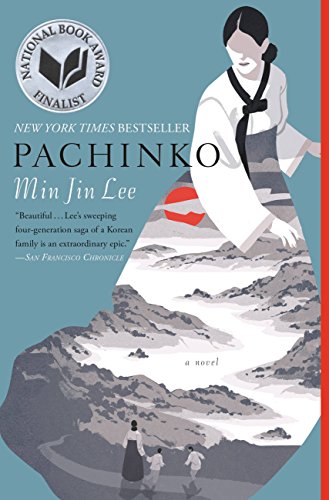
37. Pachinko by Min Jin Lee
If you think that racial and ethnic discrimination exists only in terms of skin color, read Pachinko to learn how incomplete that perception is. The story starts in the early 1900s with Sunja, a young Korean farmer’s daughter, who is courted by the wealthy fisherman, Hansu. By the time she learns that he’s married to someone else, she’s already carrying his child. But instead of becoming his second wife, Sunja chooses to marry an ailing minister and follow him to Japan. There is where the trouble begins, as Sunja and her children face discrimination by the Japanese for being Korean. The Korean descendants go on to work all kinds of odd jobs, from kimchi-making to running Pachinko parlors — popular arcades which can also function as casinos — to survive the highly competitive environment of Japan.
Pachinko is as riveting as it is eye-opening. It’s a must-read for historical fiction fans who want to broaden their understanding about ethnic diversity and international migration.

38. The Remains of the Day by Kazuo Ishiguro
Considered one of the best books of all time, The Remains of the Day is a dazzling account of the life of Stevens, an English butler working in the early 20th century. Stevens visits an old colleague in 1956 and is reminded of his time serving with her in a nobleman’s mansion. For thirty years, he worked for Lord Darlington, devoting himself loyally to the lord, his exploits, and his reputation — as was his duty. And yet, all wasn’t as perfect as it seemed, and now, as butler to a new gentleman, Stevens finds himself questioning his purpose.
British aristocracy never fails to intrigue, and it’s even more fascinating to watch as their way of life slowly crumbles. The Remains of the Day satisfies our curiosity by letting us into the minds of thoughtful characters who are learning to let go of a receding era.

39. Fingersmith by Sarah Waters
If you’ve encountered Fingersmith, it’s probably through The Handmaiden, the sensual, darkly funny South Korean film that reimagines Sarah Waters’ crime story in Japanese-occupied Korea. The original novel moves through the same narrative beats: two women running elaborate cons on each other end up falling in love and teaming up against other grifters. But unlike the movie, Waters’s book is set in Victorian Britain.
Sue Trinder, an orphan, was raised among thieves. Maud Lilly — also an orphan — was taken in by her wealthy uncle, an amateur scholar who forces her to assist him on a mysterious bibliographical project. The two meet thanks to a conman known as Gentleman, who hatches a scheme to seduce Maud for her considerable inheritance — with Sue’s help. His scheme hits a roadblock when the two women realize exactly how much they have in common.

40. The Buddha in the Attic by Julie Otsuka
In The Buddha in the Attic, Japanese-American author Julie Otsuka tackles the phenomenon of “picture brides,” young women who immigrated from Japan to California to marry men they knew only from photographs. Spare and evocative in its prose, this National Book Award winner features a startlingly unusual narrative choice: it’s told entirely in the first person plural. The resulting text reads like a poem backed by the rigor of historical research, at once lyrical and incisive.
This hauntingly poetic book resists summarization. Instead of plot points, Otsuka fashions moods — starting with the picture brides’ trepidation as they prepare to meet their fates, battling homesickness as well as seasickness on the long journey across the Pacific.
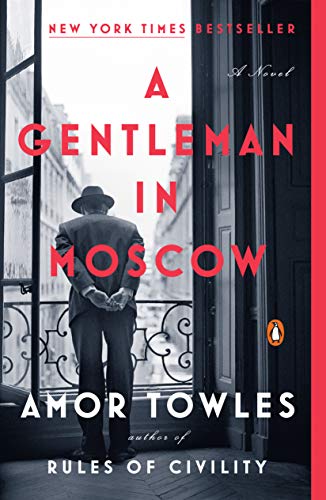
41. A Gentleman in Moscow by Amor Towles
If you’re looking for a historical novel to move you to tears, A Gentleman in Moscow is the one for you. Famously recommended by Bill Gates, this elegantly written novel follows Count Alexander Ilyich Rostov, a good-natured gentleman whose birth status makes him a target of the new regime installed in 1922. He’s moved to the luxury Metropol Hotel opposite the Kremlin, where he watches as his whole way of life crumbles under the pressure of the Bolshevik Revolution.
A Gentleman in Moscow is a story about a revolutionary era that defined international history for decades to come, but it’s also a timeless tale of a man searching for meaning in an ever-changing world.
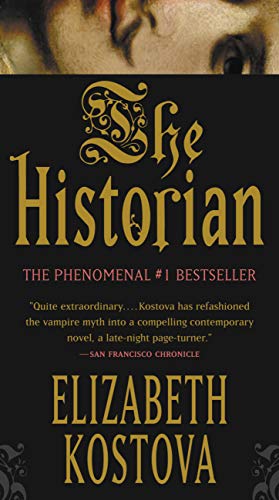
42. The Historian by Elizabeth Kostova
The Historian combines a lot of narrative threads: it’s an epistolary novel detailing the Gothic mysteries surrounding the myth of Dracula and the history of Vlad the Impaler. The story features three generations of researchers — the unnamed narrator, her father Paul, and his mentor, Professor Bartholomew Rossi — who documented their journeys through Eastern Europe in search of the truth behind vampire legends.
From secret codes in medieval texts to hidden tombs, expect to be sucked into a spine-tingling adventure in which the line between myth and history blurs.
World War II
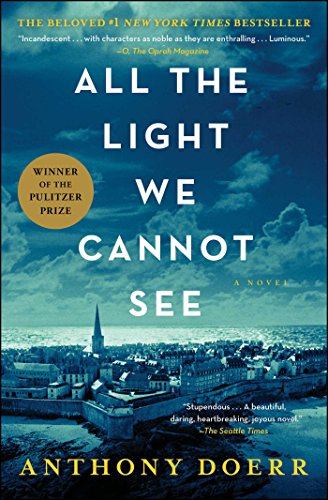
43. All the Light We Cannot See by Anthony Doerr
There’s no shortage of World War II novels, even on this list. But in this crowded corner of historical fiction, Anthony Doerr’s stunning, stylish epic manages to stand out. In All the Light We Cannot See, he uses wartime strife to deepen and enrich a story that comes down, in the end, to two unforgettable characters.
Marie-Laure, the blind daughter of a museum locksmith, flees Nazi-occupied Paris with her father. With them, they carry a priceless jewel salvaged from the collections they left behind. Meanwhile, the brilliant German orphan Werner Pfennig is forced to join the Hitler Youth — and then sent out to track down enemy radio signals.

44. Atonement by Ian McEwan
Perhaps you already know the story from the movie — Atonement stars Briony Tallis, a budding writer who misinterpreted the relationship between her sister Cecilia and their housekeeper’s son, Robbie. Her innocent mistake caused her to make unfounded accusations against Robbie — leading the sisters to become estranged. World War II comes and takes Robbie away to France, leaving Briony with her own guilt. Now that she’s matured and understands the rippling consequences of her actions, and she’s left with little chance to make up for it.
Atonement is a beautiful novel in many ways. One of its key strengths is its poignant representation of the conscripted soldier’s experiences in a foreign land, fighting a seemingly losing battle far from home.

45. The Book Thief by Markus Zusak
While this is yet another book about World War II, The Book Thief’s unique narrator sets it apart. Readers accompany Death during a busy period in his career as one young girl — heartbreakingly separated from her mother and sick brother while evacuating the war zone — catches his attention. The girl, Liesel, moves into the home of Hans and Rosa Hubermann, a weary but kind-hearted couple who is sheltering a Jewish man in their basement. Hans teaches his new daughter how to read in an effort to help her recover from the trauma of losing her family, and Liesel begins to steal books that are being burned by the Nazis. Despite how low the Hubermanns try to lay, trouble is just around the corner under this vicious authoritarian regime…
The unusual curiosity that Death has about Liesel’s life makes this story both beautiful and harrowing: it highlights the depravity and inhumanity of the force that took over much of Europe in the 1940s.

46. The English Patient by Michael Ondaatjie
Four people from four different cultures are united under one roof towards the end of World War II: a Canadian Army nurse, a heavily injured, supposedly English man, a British combat engineer of Indian origin, and a Italian-Canadian spy. While each has their own tasks and goals, they begin to share their traumatic experiences of the war — and their mutual desire to survive.
Ondaatjie’s The English Patient is unique in the way it treats this global conflict: it focuses on the many cultures involved, as well as on how the differences between them can’t outweigh people’s shared humanity and longing for normalcy.
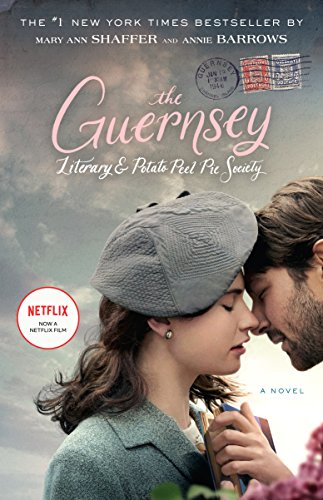
47. The Guernsey Literary and Potato Peel Pie Society by Maria Ann Schaffre and Annie Barrows
Through a series of letters between comedic writer Julie Ashton and book-lover Dawsy Adams, the story of The Guernsey Literary and Potato Peel Pie Society is told. Julie is a rising author who recounted her experience of World War II and is now in search of a new topic to treat. Dawsy lives in Guernsey and is a member of the strangely specific society in the novel’s title, which appears to be a little book club. Through their exchanges, Julie learns about the German wartime occupation of the island — and, more importantly, the origin of the society’s peculiar name, which prompts her to visit it.
Full of quippy correspondence and humorous circumstances, The Guernsey Literary and Potato Peel Pie Society avoids being overly heavy, and yet still manages to present readers with another facet of life during the deadliest conflict in history.

48. Half-Blood Blues by Esi Edugyan
With its lilting, musical prose, Half-Blood Blues accomplishes many things at once. It’s a gripping mystery tale and also a love letter to jazz. But above all, it tells the story of a community that gets overshadowed in conventional World War II stories: the Afro-Germans persecuted by the Nazi regime.
Hieronymus Falk is a gifted jazz musician: though only twenty years old, he’s already been hailed as a master trumpeter by Louis Armstrong himself. But it’s 1940, and Hiero’s genius can’t save him from the Nazi Party’s stranglehold over his native Germany. Half-black and a purveyor of “degenerate” music to boot, he’s soon arrested and silenced. The bassist Sidney Griffiths is the last person to see him before he’s taken away. Fifty years later, with documentary retrospectives on Hiero starting to air, Sid still can’t let go of what happened to his bandmate.

49. Human Voices by Penelope Fitzgerald
As World War II rages and German bombs rain down on London, a group of radio employees hunker down in Broadcasting House. The city might go to rubble outside, but nothing’s going to stop them from delivering the Nine O’Clock News. After all, they are the BBC.
Penelope Fitzgerald’s moving — and sharply funny — Human Voices shows a group of flawed human beings doing their best to bear up under an unwanted historical mandate. Sam Brooks, the Recorded Programme Director, might be a selfish, neurotic manager. And Annie Asra, his assistant, might have a less than prudent attachment to her boss. But together, they’ll do their best to insure the nation’s never at a loss for radio programming.

50. The Night Watch by Sarah Waters
The Night Watch literally takes you back in time — it opens in 1947 and closes in 1941. Diving into the midst of World War II and its aftermath, Waters weaves together the lives of four different people: Kay, Helen, Viv, and Duncan. Some of them barely knew each other, but they’re united by their experiences of the war, their participation in national mobilization, and the strangeness of having to find new meaning after peace is achieved.
This is more than a novel about war: it’s a story of love and loss in an incredibly uncertain and extraordinary period when life swung rapidly from one emotional extreme to another.
Post-War Era

51. Sophie's Choice by William Styron
Thanks to William Styron’s searing, thought-provoking novel, the phrase “Sophie’s choice” has entered the popular lexicon, denoting an impossible decision where every possible outcome horrifies the chooser. In Sophie’s Choice, the titular Sophie — a Polish-Catholic concentration camp survivor — was forced to decide which of her two children to spare from the gas chambers.
The story kicks off years after Sophie made her choice. In a Brooklyn boardinghouse, she shares her harrowing personal history with the young writer Stingo. But their blossoming friendship inspires the jealousy of Sophie’s lover, Nathan, a brilliant Jewish-American scientist with an undiagnosed case of schizophrenia. As the three of them draw ever closer in a dark, psychosexual dance, Sophie’s past continues to haunt her.

52. My Brilliant Friend by Elena Ferrante
Elena Ferrante is arguably the most successful historical fiction writer working today — and almost no one even knows her real name. Her wildly successful Neapolitan Novels proved you don’t need a cult of personality to sell books. Even without any author photos on their covers, these novels managed to enchant readers with their subtle, exacting depictions of female friendship and ambition in a turbulent era.
The series’ first installment, My Brilliant Friend, offers a richly textured look at 1950s Naples, in a neighborhood where gangsters have a hand in every business and the specter of poverty haunts every home. Friends Elena and Lila grow up together among workaday crime and domestic strife. They dream of escape, and school seems to offer a way out. But while the diligent Elena manages to claw her way up the educational ladder, the rebellious prodigy Lila is kept from further study by her own parents.

53. The Night Watchman by Louise Erdrich
Chippewa novelist Louise Erdrich based The Night Watchman on her own grandfather’s story: he fought the US government’s efforts to seize Native land in the 1950s. In Erdrich’s reimagining, this real-life activist becomes Thomas Wazhashk, a Chippewa Council member who works as a night watchman at a factory near North Dakota’s Turtle Mountain Reservation.
Congress is set to vote on a bill that threatens the Chippewas’ rights to their own land — all under the guise of “emancipating” them. Alarmed, Thomas finds himself drawn into the fray on behalf of his entire community.

54. The Poisonwood Bible by Barbara Kingsolver
A modern classic and a perennial showpiece on school syllabi, The Poisonwood Bible is the kind of required reading that students tend to adore, revisiting it again and again long after class is out of session. It’s a book with universal appeal — no wonder it received nods from both Oprah’s Book Club and the Pulitzer committee.
In 1959, the Price family moves from Georgia to the Belgian Congo, where patriarch Nathan is determined to win souls to the Southern Baptist faith. As they acclimate to life in the Congo, the four Price girls begin to question their father’s mission — and their own place in a country wracked by brutal, colonialist rule.
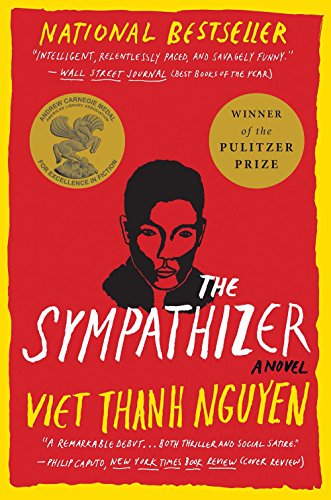
55. The Sympathizer by Viet Thanh Nguyen
Viet Thanh Nguyen’s Pulitzer prize-winning novel, The Sympathizer, is the account of an undercover agent’s confession of espionage during the war between North and South Vietnam. The unnamed protagonist retells his climb up the command chain in Saigon and his eventual flight to the US, all the while reporting to his comrades in North Vietnam. And yet his story isn’t the simple tale of a loyal communist — he forges genuine friendships with the Southern generals and agents, who had been with him through life-and-death situations.
Beyond reflecting various perspectives on this controversial war, Nguyen novel is also an ode to humanity — something that’s so often pushed to the side by political conflict.

56. A Thousand Splendid Suns by Khaled Hosseini
Let us go now to 1970s Afghanistan, where Mariam and Laila, born a generation apart from one another, are forced to marry the same man. As expected, the relationship between them starts out cold — both are trying to determine their position within the marriage. But the longer they stay with each other, the more they realize they have in common. Thus begins the sisterhood between the two. Together, Mariam and Laila help each other survive the increasingly harsh conditions that women have to live through as the Taliban gain influence and start implementing drastic measures to strip away their rights.
Soulfully written, A Thousand Splendid Suns explores not only the difficulties that many women still face today in Afghanistan, but also the indestructible strength and solidarity they draw on to overcome those difficulties — for themselves and for their families.

57. Human Acts by Han Kang
It’s 1980. Park Chung-hee, the dictatorial ruler of South Korea, was assassinated just last year. Now pro-democracy activists are rising up, demanding political power, a free press, and an end to martial law. In the city of Gwangju, demonstrators and soldiers clash — until paratroopers open fire on protesting students. By the time the rubble settles, around 2,000 citizens are dead.
The Gwangju Uprisings form the harrowing backdrop to Human Acts, written by acclaimed South Korean novelist Han Kong and translated with remarkable sensitivity by Deborah Smith. Weaving together fiction, history, and even memoir, this difficult but brilliant book gives a voice to both those who survived and those who didn’t.
Postcolonial History

58. The God of Small Things by Arundhati Roy
Arundhati Roy’s first novel packs a punch — it’s the story of a pair of twins, brother and sister, growing up in politically unstable postcolonial India. Between the pull of tradition and an unclear national future, between the ingrained caste system and new possibilities in foreign lands, Estha and Rahel can only hold onto each other for support as the world around them changes.
Roy reflects boldly on the messiness of a period in Indian history that’s often glorified. Her brave exploration of previously unexamined themes made The God of Small Things controversial when it was published in 1997. However, it’s those exact same things that make this book so important to read.
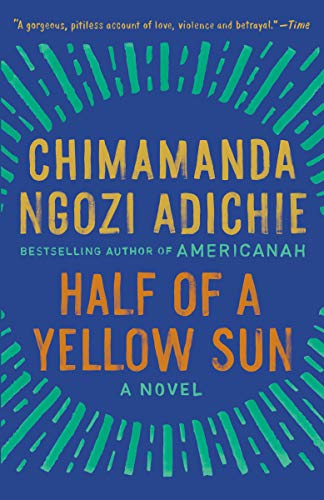
59. Half of a Yellow Sun by Chimamanda Ngozi Adichie
The titular symbol of Half of a Yellow Sun is the emblem adorning the flag of Biafra, a nation that briefly seceded from Nigeria in the late 1960s. Chimamanda Ngozi Adichie’s story revolves around this short-lived nation. As the Igbo people of Southern Nigeria declare their independence from a state that wasn’t built to represent them, civil war breaks out. University professor Odenigbo, a Biafran nationalist, struggles to keep his young family not only alive, but also in a position to fight for their culture and communal identity.
The legacy of colonialism in Africa is harrowing and powerful, particularly when it comes to the arbitrary borders that bound conflicting peoples under one nation not of their choosing. One book can never cover everything, but Half of a Yellow Sun provides a poetic portal into this turbulent era.

60. The House of the Spirits by Isabel Allende
If you’re unsure whether historical fiction and magical realism mix well, give Isabel Allende a chance to change your mind with her debut novel. The House of the Spirits features Clara del Valle and her uncanny ability to predict life events, from sudden deaths to inevitable marriages. Following her intuition, she marries Esteban Trueba, a formerly impoverished, now ruthless plantation owner and politician. In the years that follow, as postcolonial Chile undergoes massive political changes, the Trueba family also face its internal challenges — the younger generations start to rebel against their predecessors.
Subtly fantastical and wholly passionate, The House of the Spirits blends familial and national histories to create a portrait of postcolonial Chile that’s both eye-opening and entertaining.
***
Want some historical facts to go with your historical fiction? Check out our roundup of the best nonfiction books of the 21st century!